Lips in Proportion: Enhancement Without the Overfilled Look
Lip treatment has an unusually low tolerance for error — a millimetre of over-correction is often the difference between balanced and obviously done.
· 5 min
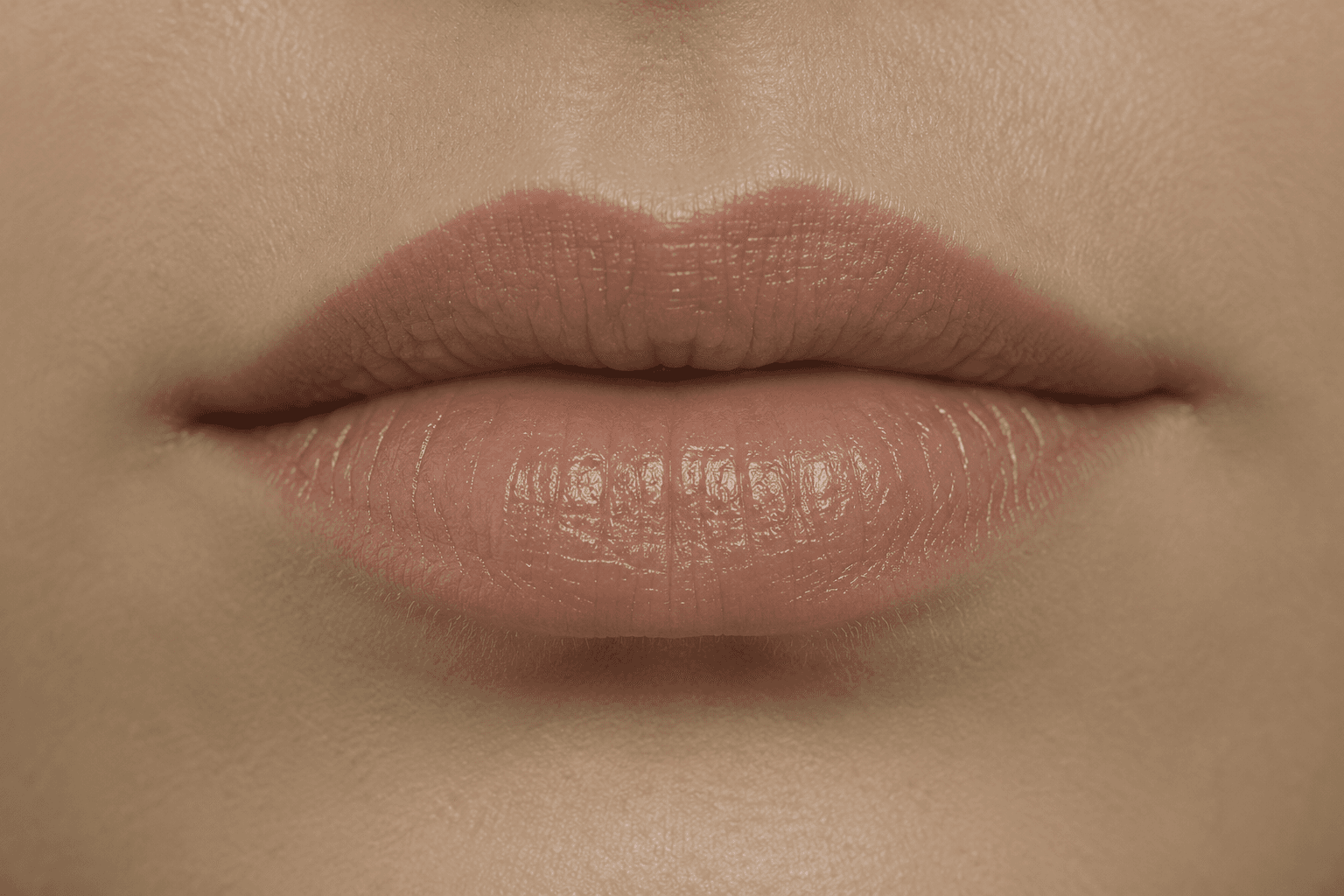
Of all the areas commonly treated in facial aesthetics, lips have arguably the narrowest margin between a well-balanced result and a visibly over-treated one. A small excess of product reads immediately, in a way that a similar excess elsewhere on the face often does not.
The lip-to-face ratio
Lips are not assessed well in isolation. Their proportion relative to the rest of the face — the width of the mouth relative to the distance between the eyes, the ratio between upper and lower lip volume, the projection of the lips relative to the chin and nose in profile — determines whether a given lip size reads as balanced or as disproportionate, regardless of the lips' absolute size. This is a specific case of the broader principle that facial proportion, not trend, is the more durable standard for any single feature.
This is why an identical volume of filler can look appropriate on one face and excessive on another — the lips were never being assessed against a universal standard, only against the face they belong to.
How overfilling happens gradually
Lip overfilling is rarely the result of one dramatic treatment. It typically happens through a series of small top-ups, each reasonable on its own, without anyone stepping back to assess the cumulative result against the original proportion. By the time it's visibly excessive, no single session is to blame.
The lips that look most natural are rarely the ones that were left alone. They're the ones where someone was willing to say 'that's enough.'
A proportion-based checklist
- The ratio between upper and lower lip — commonly cited as roughly one to one-point-six, though this varies meaningfully by individual and ethnicity
- Lip projection relative to the chin and nose in profile, not only lip size viewed from the front
- Whether the natural lip border (the vermilion) is being restored and defined, rather than obscured by volume placed without regard for it
- A running record of cumulative volume across sessions, so a top-up decision is made against the full history, not just the most recent visit
A considered lip consultation is often as much about deciding when to stop, or whether to treat at all, as it is about the treatment itself — the proportion, not the volume, is the actual target. It is the same discipline that governs how the face is assessed structurally more broadly.
Frequently Asked Questions
How do I know if my lips have been gradually overfilled over time?
Comparing a current photograph to one from several years ago, taken at a similar angle, is more reliable than judging from memory — gradual change is difficult to notice day to day but is usually obvious across a longer time span.
Is there an ideal lip size that suits every face?
No — the right size is a function of that individual's facial proportions, not a universal template. This is why the same technique applied without reference to those proportions can produce very different quality results across different faces.
Can overfilled lips be corrected?
In most cases, yes — hyaluronic acid filler can be dissolved, allowing the lips to return closer to their natural baseline before a more conservative, proportion-based plan is considered.
Should lip treatment always start conservatively?
In general, yes. It's straightforward to add more volume in a subsequent session once the result is assessed, but far harder to remove excess without a full dissolving process, so a conservative starting point tends to serve the final result better.
Clinical Perspective
By Dr. Gan Lee Ping
Lips have the least room for error of any area I treat, and the reason isn't the product — it's that a small excess reads immediately in a way that the same excess elsewhere on the face often doesn't. So the question I return to isn't 'how full,' it's 'full relative to what' — the width of the mouth, the projection of the chin and nose in profile, the proportion between upper and lower lip specific to that face.
Overfilled lips are rarely the result of one session going wrong. They're the accumulation of several reasonable-looking top-ups, each fine on its own, without anyone stepping back to compare the current result to where it started. Part of my role in that sequence is being willing to say a lip is finished, or that a requested top-up isn't warranted yet — which, in my experience, is what actually produces lips that still look like lips a decade on.
Selected References
1. Penna V, Fricke A, Iblher N, Eisenhardt SU, Stark GB. The attractive lip: A photomorphometric analysis. J Plast Reconstr Aesthet Surg. 2015;68(7):920-929.
2. Anic-Milosevic S, Mestrovic S, Prlić A, Slaj M. Proportions in the upper lip-lower lip-chin area of the lower face as determined by photogrammetric method. J Craniomaxillofac Surg. 2010;38(2):90-95.
3. Blandford AD, Hwang CJ, Young J, Barnes AC, Plesec TP, Perry JD. Microanatomical location of hyaluronic acid gel following injection of the upper lip vermillion border: comparison of needle and microcannula injection technique. Ophthalmic Plast Reconstr Surg. 2018;34(3):296-299.
About Dr. Gan Lee Ping
Dr. Gan Lee Ping is a Singapore aesthetic doctor with a clinical interest in facial anatomy, evidence-based aesthetic medicine, and natural-looking outcomes. Her educational articles focus on helping readers understand the anatomy, ageing processes and evidence behind aesthetic medicine so they can make informed decisions.
Consultation
Begin with a consultation
Every plan starts with an individual assessment — no protocol is recommended before one.
Book a ConsultationRelated in the Journal

Face
Temple Hollowing: The Overlooked Structural Loss
The temple rarely gets mentioned in a first consultation, yet its loss of volume quietly changes the shape of the entire upper face.
· 5 min

Face
The Tear Trough, Explained: Why Not Every Hollow Needs Filler
Under-eye hollowing is one of the most requested treatments and one of the easiest to get wrong, because the visible hollow often has more than one cause.
· 6 min

Face
Jawline Definition Without Overfilling
A defined jawline is usually read as a matter of volume. More often, it's a matter of support — and the two call for very different treatment plans.
· 6 min